
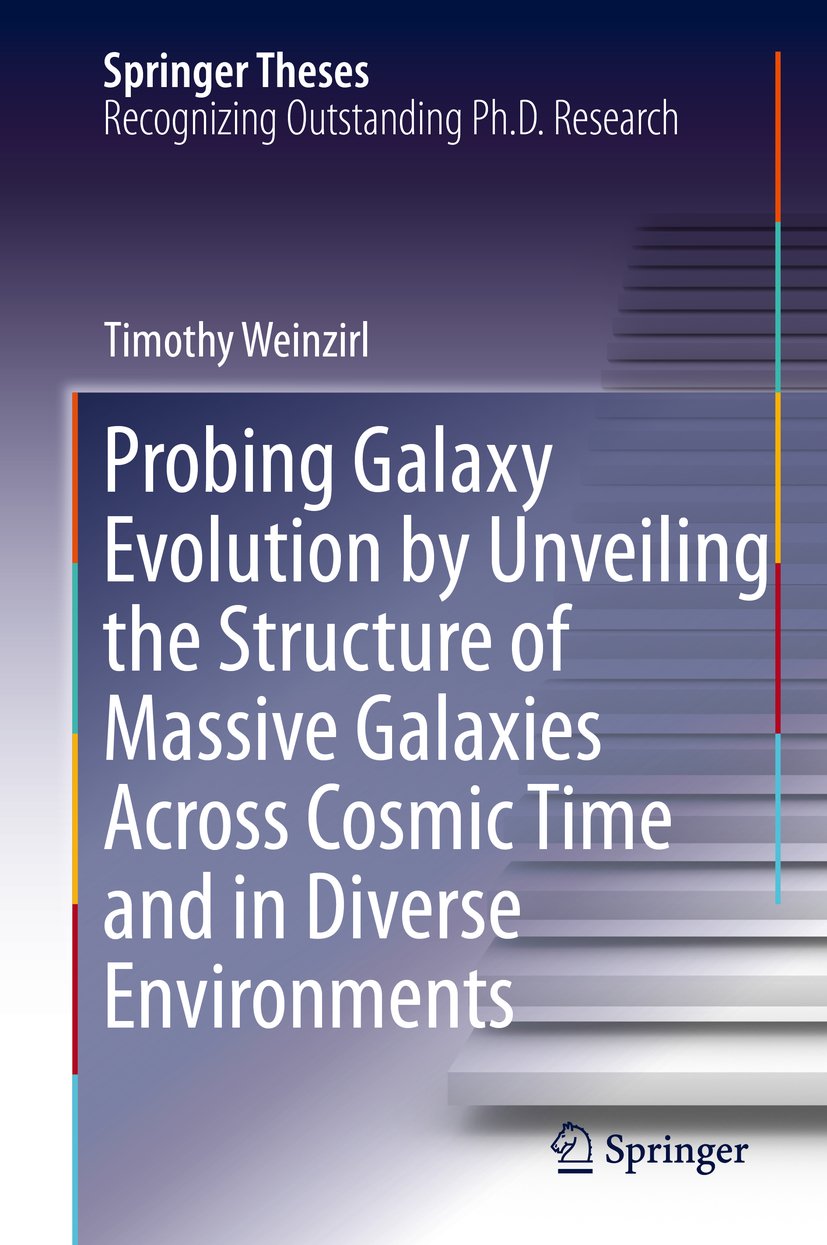
Probing Galaxy Evolution by Unveiling the Structure of Massive Galaxies Across Cosmic Time and in Diverse Environments (Springer Theses)
Product details
| Management number | 233299485 | Release Date | 2026/06/27 | List Price | US$29.82 | Model Number | 233299485 | ||
|---|---|---|---|---|---|---|---|---|---|
| Category | |||||||||
Awarded the American Astronomical Society (AAS) Rodger Doxsey Travel Prize, and with a foreword by thesis supervisor Professor Shardha Jogee at the University of Texas at Austin, this thesis discusses one of the primary outstanding problems in extragalactic astronomy: how galaxies form and evolve. Galaxies consist of two fundamental kinds of structure: rotationally supported disks and spheroidal/triaxial structures supported by random stellar motions. Understanding the balance between these galaxy components is vital to comprehending the relative importance of the different mechanisms (galaxy collisions, gas accretion and internal secular processes) that assemble and shape galaxies. Using panchromatic imaging from some of the largest and deepest space-based galaxy surveys, an empirical census of galaxy structure is made for galaxies at different cosmic epochs and in environments spanning low to extremely high galaxy number densities. An important result of this work is that disk structures are far more prevalent in massive galaxies than previously thought. The associated challenges raised for contemporary theoretical models of galaxy formation are discussed. The method of galaxy structural decomposition is treated thoroughly since it is relevant for future studies of galaxy structure using next-generation facilities, like the James Webb Space Telescope and the ground-based Giant Magellan Telescope with adaptive optics. Read more
Bestseller ranking
Fluid Evacuators




Customers who viewed this product also viewed
Astronomy




Correction of product information
If you notice any omissions or errors in the product information on this page, please use the correction request form below.
Correction Request Form